The Long-Term Impact of Montessori Preschool Education on Child Development
The educational landscape is evolving, yet some traditional methods continue to hold ground due to their long-term benefits. Such is the case with the Montessori method, a century-old teaching approach that has recently garnered renewed attention in public education. Recent studies are shedding light on the profound impact this methodology can have in school psychology, particularly when implemented in preschool settings.
Understanding Montessori: Beyond the Basics
The Montessori method, developed by Dr. Maria Montessori in the early 20th century, emphasizes child-led learning, independence, exploration, and respect for a child’s natural psychological development.
A study published on Science Daily found that Montessori education offers stronger reading, memory, and executive function skills in kindergarten students than traditional preschools. It suggests a powerful, affordable educational model that not only meets but exceeds the intellectual needs of young learners.
Key Components of Montessori in Child Development
- Self-directed Learning: Children are encouraged to choose their activities, fostering intrinsic motivation and independence.
- Mixed-age Classrooms: This setup allows younger students to learn from older peers, promoting social development and cooperative learning.
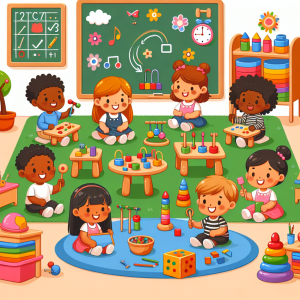
- Sensory-Based Education: Montessori environments are rich in materials that engage the senses, catalyzing cognitive development through experiential learning.
According to a report by the Institute of Education Sciences, the method is particularly effective in supporting students’ long-term academic and behavioral development, especially among economically disadvantaged groups.
Evidence from Controlled Trials and Ongoing Research
The Proceedings of the National Academy of Sciences (PNAS) published a randomized controlled trial showing that children enrolled in Montessori preschools exhibit superior outcomes in literacy and numeracy, as well as social-emotional development by the end of kindergarten. The study emphasized that such programs could significantly narrow achievement gaps, offering lasting benefits well beyond preschool years.
Additional research, including a study from PubMed Central, indicates that Montessori students develop better executive functioning skills, characterized by enhanced focus, working memory, and cognitive flexibility. This suggests that the Montessori approach not only facilitates immediate educational achievements but also supports developmental trajectories that extend into later schooling.
Challenges and Criticisms
While the Montessori method is celebrated for its innovative approach, it also faces criticism and challenges. Critics point to the need for specially trained educators and the adaptation of methods to fit cultural contexts. Moreover, a UC Irvine review notes the mixed results regarding its long-term effectiveness, emphasizing that outcomes can heavily depend on implementation fidelity.
The Future of Montessori in Public Education
Amidst its challenges, Montessori education continues to influence modern educational practices. Schools are increasingly integrating aspects of the Montessori philosophy, like self-paced learning and collaborative play, into more traditional models. As educators and policymakers strive to enhance educational outcomes, the evidence supporting Montessori’s effectiveness could inform future educational reforms.
Ultimately, Montessori’s century-old principles remain relevant, offering timeless insights into child psychology and education that continue to resonate within contemporary school systems. As studies confirm its efficacy, the Montessori method remains a compelling educational strategy for fostering holistic development in young learners.