Bullying Hurts More Than We Admit
A seventh-grader starts asking to stay home more often. Not every day—just Mondays. Then Fridays. Their grades haven’t crashed. No bruises. No dramatic outbursts. Just stomachaches, headaches, and a quiet shift from chatty to withdrawn.
Here’s the gut-punch: this is what bullying often looks like before adults recognize it as bullying.
And according to a major new mixed-methods study of middle school students, parents, teachers, and experts, this quiet suffering is not rare—it’s systemic, underestimated, and deeply damaging to children’s mental health journal.
The Myth That Keeps Kids Unsafe
One of the most unsettling findings from this research is not just how often bullying happens, but how differently adults interpret it.
- Students describe bullying as emotionally overwhelming and deeply distressing.
- Parents are more likely to dismiss it as “part of growing up.”
- Teachers recognize academic harm but often underestimate long-term mental health effects.
That gap matters. Because when adults minimize bullying, kids stop talking—and the damage goes underground.
Over 25% of students who experienced bullying didn’t tell anyone, and nearly 40% weren’t even sure if what they experienced “counted.” That hesitation alone should make us pause. If a child doesn’t feel safe naming harm, the system has already failed.
What the Science Shows—Without the Jargon
This study combined student surveys with in-depth interviews from parents, teachers, school counselors, and experts. That matters because bullying is not just a behavior—it’s a system.
Here’s what stood out:
1. Bullying and anxiety are tightly linked
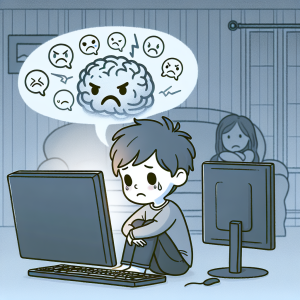
Students who experienced bullying more often were significantly more likely to report stress, anxiety, sadness, and emotional withdrawal. This wasn’t anecdotal—it showed up clearly in the data.
In simple terms: the more bullying a child experiences, the less safe they feel at school—and the more their mental health suffers.
2. School doesn’t feel safe anymore
When bullying increases, students’ sense of school safety drops. That feeling of “this place isn’t safe for me” is one of the strongest predictors of:
- School avoidance
- Trouble concentrating
- Emotional shutdown
- Long-term disengagement
About 1 in 10 students said bullying made them feel unsafe at school. That’s not a small group. That’s a classroom.
3. The damage doesn’t always look dramatic
Most students said bullying didn’t “destroy” their relationship with school—but that doesn’t mean it didn’t matter.
Instead, the harm showed up as:
- Difficulty concentrating
- Feeling like they didn’t belong
- Quiet withdrawal from peers
- Loss of confidence
These are the exact signs adults often miss—or misinterpret as laziness, attitude, or “normal adolescence.”
Why Adults Miss It (Even When They Care)
Here’s where the study gets uncomfortable—in a productive way.
Many parents interviewed described bullying as:
- A normal part of social development
- Something kids exaggerate
- Less serious unless it’s physical
But bullying today is often verbal, social, and relational—exclusion, rumors, humiliation, group targeting. These don’t leave bruises. They leave shame.
Teachers, on the other hand, often see the immediate classroom impact but lack time, training, or resources to address the deeper emotional fallout.
Experts were blunt: without clear systems, bullying is handled inconsistently—and often too late.
The School Climate Effect
One of the most important insights from the study is this: bullying thrives where school climate is weak.
Students who felt their school was orderly, fair, and emotionally supportive were less likely to be involved in bullying, either as victims or aggressors.
That means bullying prevention is not just about stopping bad behavior. It’s about building environments where kids feel seen, protected, and valued.
What Actually Helps (According to the Research)
This study didn’t just document harm—it pointed to solutions that work in real schools with real constraints.
Practical takeaways for schools and families:
- Normalize reporting. Kids need confidential, safe ways to speak up without fear of retaliation.
- Train adults—regularly. One-off assemblies don’t cut it. Teachers and staff need ongoing support.
- Use school counselors fully. Counseling—individual and group—was repeatedly identified as one of the most effective supports.
- Address social bullying explicitly. Exclusion and humiliation deserve the same seriousness as physical aggression.
- Involve parents as partners. When parents understand the emotional toll, responses improve.
Most importantly: don’t wait for crisis-level signs. Withdrawal, anxiety, and school avoidance are early warnings—not personality traits.
The Big Picture Question
If bullying quietly reshapes how safe a child feels in the world, then preventing it isn’t just discipline—it’s mental health care.
Schools are one of the most powerful environments shaping children’s emotional development. When they get it right, they don’t just reduce harm—they build resilience that lasts.
Let’s Talk About It
Bullying is not a “kids will work it out” issue. It’s a systems issue—and systems can change.
Join the conversation:
- What’s the biggest mental health challenge you see in schools today?
- How could schools respond sooner when kids start pulling away?
- What’s one school psychology insight that changed how you parent or teach?
Because when we listen earlier—and act together—we don’t just make schools safer.
We make childhood safer.