The Hidden Rules of the Classroom
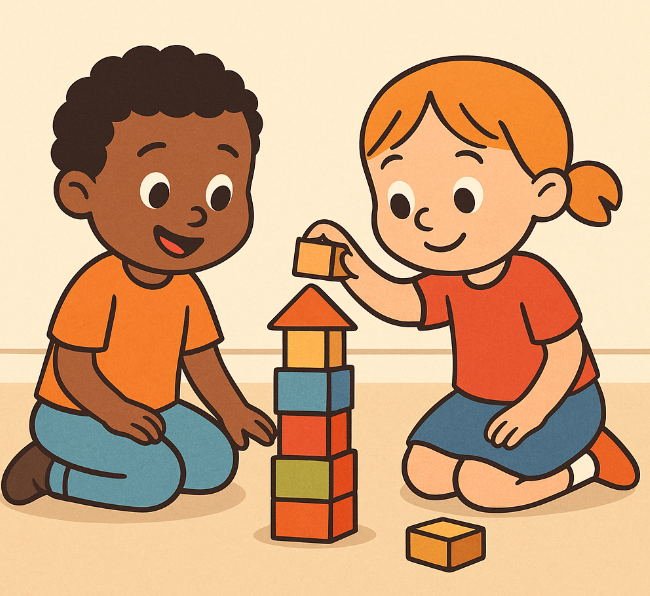
A second-grader walked up to a classmate during free choice time, grinning, holding a LEGO tower he’d worked on for nearly 20 minutes. “Want to build with me?” he asked.
The other child shrugged. “Not really.”
Two more shook their heads.
Another didn’t respond at all.
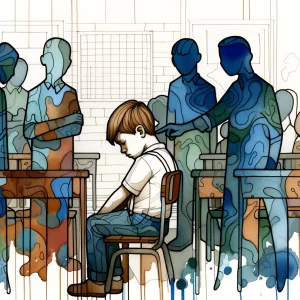
By the time he returned to his seat, his smile had faded. His teacher saw it—and her heart sank. She’d watched this pattern play out all year: a thoughtful, bright autistic student trying again and again to enter play, only to be left on the edges of peer groups.
Parents and teachers see these moments. What we haven’t had—until now—is a clear look at why these patterns happen, and how deep they run inside a classroom’s hidden social web.
A new study offers one of the most innovative, illuminating answers we’ve seen yet.
A Video Game That Reveals the Classroom’s Social Secrets
Researchers in Chile created something brilliant and deceptively simple: a 5-minute online game where kids earned “stars” and had to choose which classmates to share them with.
No surveys. No awkward interviews. No teacher reports. Just children making decisions—who they choose, how much they share, and whether they reciprocate kindness.
More than 600 students across 26 classrooms played this “Game of the Stars,” and what emerged was a crystal-clear map of each classroom’s social network:
- Who is chosen often
- Who receives generosity
- Who is left out
- Who reciprocates friendships—and who doesn’t
It was the social dynamics of childhood, translated into data. And one trend was impossible to ignore.
The Hard Truth: Some Kids Live on the Social Periphery
Across every classroom, two groups of students consistently appeared on the edges of these social networks:
1. Students with Special Educational Needs (SEN)
2. Autistic students—by an even wider margin
The numbers were stark:
- Autistic students were chosen significantly fewer times by their classmates.
- They received far fewer stars, a sign of lower social preference.
- They engaged in less reciprocal interaction, meaning friendships were less often mutual.
- Pairs of non-autistic students and autistic classmates were up to 17% less likely to reciprocate choices.
These patterns persisted even after accounting for variables such as attendance, grades, and classroom differences.
Let’s pause here. Kids weren’t rejecting autistic classmates because they were being unkind. They weren’t distributing stars unfairly—overall, children tended to share equitably.
Instead, this research shows something deeper: Autistic children are navigating a social world built on norms they did not design.
And their peers often don’t know how to meet them halfway.
This Isn’t About Deficits. It’s About Mismatched Social Languages.
The researchers emphasize a crucial point: Autistic kids aren’t “failing” at social interaction. The issue is reciprocal misunderstanding.
Non-autistic kids often misread autistic communication. Autistic kids often misread non-autistic social cues. Both sides miss each other—and both sides lose.
This aligns with what many parents and school psychologists already know:
When a child’s way of communicating doesn’t match the group’s unwritten rules, they become unintentionally isolated.
The study reframes the issue beautifully—not as a problem within autistic children, but as a relationship problem between students and their environment.
This distinction changes everything,
Three Big Insights Every Parent and Educator Should Know
1. Autistic kids may be isolated even in “inclusive” classrooms.
Inclusion is not physical placement. It’s whether students are chosen, valued, and connected. Being in the room is not the same as belonging.
2. Reciprocity matters more than we realize.
In childhood, mutual friendships shape mental health, confidence, and emotional regulation. Autistic students received far fewer reciprocated interactions, which can reinforce loneliness.
3. Girls mask better—but pay a price.
The study even found a fascinating gender pattern: Autistic girls often acted as “bridges” between groups—higher betweenness in social networks—suggesting they may be working harder to fit in.
Masking can look like success. But it often comes with anxiety, fatigue, and burnout.
Why This Matters for Mental Health
A child’s social world is one of the strongest predictors of:
- Self-esteem
- Classroom engagement
- Resilience
- Emotional well-being
- Risk of bullying
- Long-term mental health
If autistic students or students with SEN consistently live on the outer rings of the social map, the consequences can ripple across years.
This research makes one thing clear: Social inclusion doesn’t happen automatically. It must be built—intentionally, thoughtfully, collaboratively.
So What Can Schools Do Right Now?
1. Teach the whole class the concept of “different social languages.”
Normalize differences in communication. Make neurodiversity visible, not whispered about.
2. Build structured peer interaction time.
Cooperative learning
Buddy systems
Small-group rotations
Peer mentoring
Shared projects
Simple structures create repeated contact—and contact builds understanding.
3. Train teachers to spot “invisible” isolation.
Some kids quietly slip through the cracks. Data like this helps educators identify who might need support.
4. Support autistic children without forcing masking.
Help them communicate authentically—not just “fit in.”
A Final Thought: The Real Question Isn’t About the Child. It’s About Us.
The researchers end with a powerful idea: Inclusion is not a trait children possess. It is something communities create.
That shifts responsibility—rightfully—onto systems, educators, peers, and policies. Because classrooms aren’t just places where kids learn math and reading. They’re the first social ecosystems children ever experience.
And every ecosystem can evolve.
Let’s Talk About It
- What’s the biggest mental health challenge you see in schools today?
- How can schools better support students’ emotional and social well-being?
- What’s one school psychology insight that changed how you parent, teach, or lead?
Share this with a teacher, school psychologist, or parent who cares deeply about kids’ mental health. Conversations like these help build the classrooms every child deserves.