
How Classroom Noise Impacts Teachers
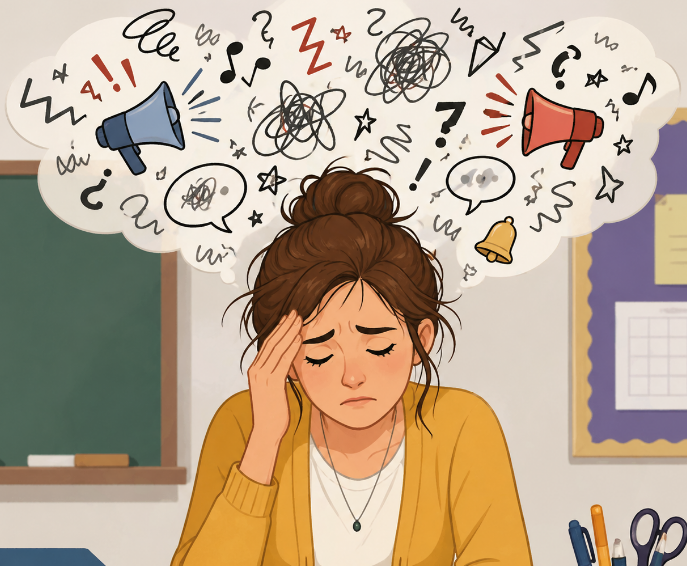
Picture this: A teacher stands before a bustling classroom, trying to engage students amid a cacophony of sounds—traffic outside, chattering children, and even the sounds of neighboring schools. It’s more than just an annoyance; it’s becoming a health crisis. In São Paulo’s schools, noise isn’t just an environmental issue—it’s seriously affecting teachers’ well-being and health.
The Hidden Impact of Classroom Noise
Recent research from São Paulo, Brazil, highlights an urgent problem: prolonged exposure to noise levels averaging 70.3 dB can increase the odds of poor self-rated health by more than fourfold.
What is 70 dB? At this level, you aren’t just hearing a background hum; you are experiencing a sound that feels roughly twice as loud as a standard conversation. If you’ve ever stood in the middle of a busy, open-plan office, you’ve lived in this range. It’s the rhythmic clacking of keyboards, the steady murmur of colleagues collaborating, and the distant whir of a printer, all blending into a constant, energetic “wall” of sound.
To get a true sense of the physical presence of 70 dB, think of your morning routine. When you step into the shower, the steady rush of water hitting the floor creates a consistent 70 dB environment. Later, if you turn on a vacuum cleaner, you are nudging that needle slightly higher, usually between 70 and 75 dB. It is loud enough to make you raise your voice to be heard by someone in the next room, yet it’s a sound we consider a standard part of domestic life.
Outdoors, this level of noise is mirrored by the steady “whoosh” of freeway traffic from about 50 feet away. It’s the sound of momentum, not the jarring screech of a horn, but the heavy, mechanical drone of cars moving at speed. While 70.3 dB is persistent and can be intrusive over a long workday, it sits safely below the threshold of physical pain, acting as the upper limit of our everyday “busy” world.
The study, conducted by Camila Quintiliano Andrade and colleagues, revealed glaring disruptions to teachers’ health, including sleep disturbances and elevated stress levels, fueled by constant noise from both inside and outside the classroom.
Why Noise Matters
What’s the big deal about noise, you ask? Well, noise levels in schools often exceed guidelines established by health organizations, exposing teachers and students to conditions that can harm both physical and mental health. Think headaches, stress, reduced sleep quality, and even increased cardiovascular risks. It’s not just the volume of traffic noise outside; the sound of hundreds of students bustling through corridors and playgrounds also plays a part.
A Closer Look at the Research
- Measuring Impact: Over one school week, noise levels were diligently recorded at seven São Paulo schools, and health assessments of teachers were conducted using validated questionnaires.
- Noteworthy Findings: Teachers in noisy schools reported greater annoyance from children’s conversations (48%), traffic (35%), and sounds from neighboring buildings (31%). Over 60% of teachers were highly sensitive to noise.
- Health Implications: A 10 dB increase in noise was linked to a fourfold increase in poor self-rated health, significant increases in noise sensitivity, and poorer sleep quality.
From Data to Action: What Can Schools Do?
So, what can be done to help our educators? The study emphasizes the importance of implementing better urban planning and acoustic design in school buildings to shield against harmful noise levels, thereby protecting school personnel and enhancing children’s learning environments.
Steps for Parents and Educators:
- Advocate for acoustic modifications in classrooms, such as soundproofing materials that can reduce reverberation and dampen external sounds.
- Collaborate with local authorities to manage traffic and minimize noise pollution around schools.
- Introduce noise-management protocols in schools to create quieter, more conducive learning spaces.
Hear Us Out: A Call to Action
While we focus efforts on individual and classroom-level solutions, there is a critical need for broader policy changes. Advocating for acoustic considerations in urban planning is essential to ensure healthier environments for both teaching and learning.
Thought-Provoking Question: What changes would you make in your school after learning that noise isn’t just annoying but a real health threat?
Let’s Talk About It
Join the conversation: Share your insights and experiences on school noise. What’s the biggest mental health challenge you see in schools today? How can schools better support students’ emotional well-being? What’s one school psychology insight that changed the way you parent or teach?
Your voice matters! Let’s build a community determined to make positive changes for a healthier school environment.