Holiday Tech & Kids’ Mental Health: What Really Happens When Screen Time Takes Over
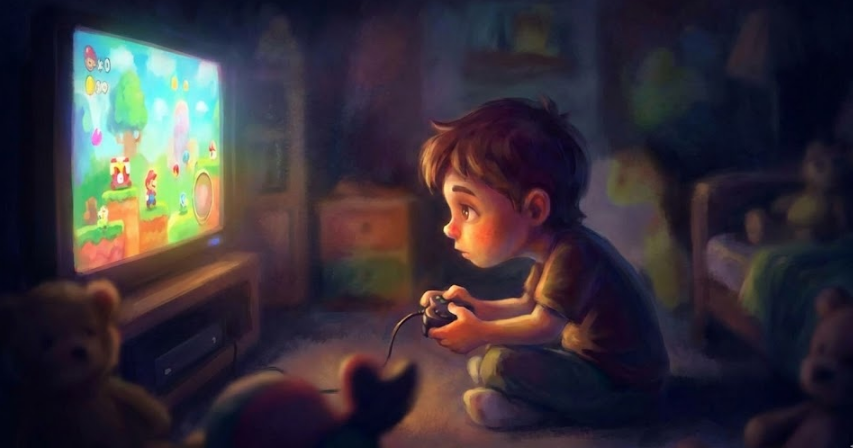
Last year, a middle school teacher told me about a student who walked into class after winter break and announced, “I stayed up until 4 a.m. every night playing my new game. I’m basically nocturnal now.”
Everyone laughed. But by February, the same student was falling asleep in class, missing assignments, and showing up without breakfast because he was rushing just to get out the door.
This isn’t a one-off story—it’s becoming the new normal, especially after the holidays when kids unwrap brand-new consoles, games, tablets, and digital accessories that practically beg for nonstop use.
And here’s the twist: Kids don’t just overuse video games. They’re increasingly bingeing YouTube, TikTok, Twitch, and endless streaming loops, which can sometimes be more dangerous because it feels so passive, so harmless, so… quiet.
A large adolescent study from the German Center for Addiction Research (2022) found that almost 90% of teens stream weekly, and about 5% show signs of a true “streaming disorder”—meaning their screen habits create real academic, emotional, and social problems. 2006-article-p451
That’s a big deal because many of the warning signs look exactly like what families experience every January.
Why Holidays Can Accidentally Set Kids Up for Trouble
Let’s be honest: the holidays are a perfect storm.
- Kids are off school
- Routine disappears
- New games and tech arrive
- Parents are busy, traveling, cooking, hosting
- Excitement peaks and bedtime evaporates
For many kids, this is the moment a habit turns into a pattern. And patterns built during school breaks don’t magically switch off once the bell rings.
The research backs this up. The 2022 adolescent study showed that streaming problems aren’t simply about “too much screen time.” Instead, problematic use is defined by three big red flags:
- Loss of control (“I can’t stop even when I want to.”)
- Prioritizing screens over everything else (friends, sports, hobbies)
- Continuing despite negative consequences (grades slip, sleep tanks, conflicts escalate)
Add in holiday gifts and excitement? You’ve got the perfect setup for all three.
But Wait—Aren’t Games and Streaming Just Fun?
Yes… and that’s exactly why it’s complicated.
Kids don’t binge screens because they’re irresponsible—they binge because their brains are wired to love reward loops, especially during adolescence. Dopamine spikes. Emotional control lags. Curiosity explodes.
Researchers note that the teen brain is especially vulnerable because the “brakes” (the prefrontal cortex) develop much more slowly than the “gas pedal” (the reward system). So even a totally normal kid can fall into patterns they don’t fully understand or see coming.
And in the study you uploaded, kids who showed signs of streaming disorder also showed higher rates of:
- Anxiety
- Depression
- Loneliness
- Sleep problems
- Lower academic performance
This isn’t caused only by screens—but screen habits amplify these struggles, especially for students already on the edge.
The Holiday Tech Pattern Teachers See Every January
Every January, schools quietly brace themselves. Here’s the pattern teachers describe over and over:
Week 1: The Crash
Kids come back exhausted. Moods are all over the place. They’re “off” their routines and struggle to adjust to structure again.
Week 2: The Tension
Homework starts piling up. Parents start discovering missing assignments. Kids insist they’re “fine,” but sleepiness, zoning out, and irritability start showing.
Week 3: The Conflict
Family fights pick up, especially around devices:
- “Just five more minutes!”
- “That’s not fair!”
- “You don’t understand!”
Week 4: The Realization
Parents start asking, “Is this becoming a problem?” Sometimes it is. Sometimes it’s just a temporary adjustment. The trick is knowing which is which.
Science-Backed Signs That Screen Use Is Becoming Harmful
Drawing on the adolescent research you provided, here are the biggest warning signs parents and educators should watch for:
✔ Sleep disruption
Kids with problematic streaming were more likely to stay up late, sleep less, and struggle with energy the next day.
✔ Changes in mood
Higher anxiety, more irritability, and more emotional reactivity.
✔ Loss of interest in friends, sports, or hobbies
Kids start replacing real-world engagement with digital immersion.
✔ Falling grades
Not because kids suddenly “stopped trying,” but because mental focus is being drained elsewhere.
✔ Increased loneliness
Paradoxically, kids consuming lots of content report feeling more isolated, not less. If you see two or more of these… it may be time for a reset.
So What Can Parents and Schools Do Right Now?
No judgment. No shame. No panic. Just science and strategy.
1. Use the “Holiday Reset Rule.”
Kids get to keep the joy of their new games—but with structure:
- School night screen curfew
- Earlier shutdown times
- Device parking spot outside the bedroom
- Weekend flexibility that still protects sleep
2. Talk about “brain health,” not “screen rules.”
Kids listen better when they feel respected. Explain how sleep, stress, and mood connect to screen habits. Make it a shared project—not a punishment.
3. Use a “balanced routine checklist.”
Ask your child each week:
- Did you spend time outside?
- Did you see friends?
- Did you move your body?
- Did you have creative time?
- Did you complete your responsibilities?
Screens aren’t the enemy. Imbalance is.
4. Partner with teachers early.
If you notice changes at home, loop in educators. You’ll often find teachers noticing the same shifts.
5. Build a family media plan.
Not a contract. Not a threat. A plan. Created together. Kids stick to what they help build.
Bottom Line: Holiday Gifts Don’t Have to Become Holiday Problems
Kids deserve joy. They deserve games, creativity, independence, and fun.
But they also deserve support, especially when digital habits get sticky.
The latest research shows this clearly: A small but meaningful group of kids struggle with impaired control, sleep disruption, academic impacts, and emotional stress linked to digital overuse. And the holidays—full of free time and new tech—can unintentionally accelerate that.
But with structure, connection, and open communication, families can turn holiday tech into a healthy, meaningful part of kids’ lives instead of a stress point.
Let’s Talk About It
Here are a few questions to spark reflection, comments, or social media discussion:
- What’s the biggest mental health challenge you see in kids after the holidays?
- How does your school or family support healthy screen habits?
- What’s one school psychology insight that changed how you think about your child’s digital life?