
When Tracking Becomes Therapy: How Self-Monitoring Helps Kids Regain Control
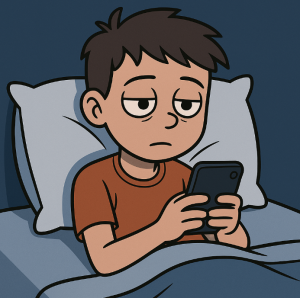
A ninth-grader sighs as the “Screen Time” alert flashes across her phone: 7 hours, 12 minutes today. For once, she doesn’t swipe it away. She stares, frowns, and thinks, That can’t be right.
That tiny moment — a flash of awareness — may be the first step toward change. According to new research, it may be all it takes to spark a mental health boost.
The Study That Surprised Everyone
A team of researchers in Seoul set out to study how young adults use their phones — not to treat them, just to collect data. Two hundred participants wore Fitbits and filled out quick check-ins about their mood and media use over four weeks. They weren’t told to change anything. No pep talks. No therapy.
But when the researchers looked at the results, they were stunned.
Even without any intervention, participants spent less time on their devices, showed fewer signs of digital addiction, and reported lower depressive symptoms by the end of the month.
How could that be?
It turns out, the act of tracking itself — noticing your behavior, reflecting on it, naming your feelings — can create the same spark of change as an intentional mental health program.
Why This Matters for Kids and Classrooms
If this effect holds true for adults, imagine the potential for children and teens. Every day, educators and parents worry about how much time students spend on screens — scrolling through TikTok, comparing lives on Instagram, or doom-scrolling the news.
But here’s the twist: awareness, not punishment, may be the key.
When students monitor their own habits — whether that’s tallying time online, tracking moods, or noticing when they get distracted — they begin building the same skill psychologists call self-regulation. It’s the foundation of emotional intelligence, impulse control, and resilience.
And that’s the skill so many teachers say is missing post-pandemic.
The Science Behind the “Awareness Effect”
This unexpected improvement isn’t magic. It’s self-regulation in motion.
Decades of psychology research show that self-monitoring changes behavior. It works like a mirror: when you can see yourself clearly, you can adjust what’s not working.
- Self-awareness → motivation. Realizing “I’m on my phone all night” creates discomfort — and motivation to act.
- Tracking → feedback loop. Recording progress gives tiny dopamine hits for improvement.
- Reflection → control. Pausing to ask “How do I feel after scrolling?” connects habits to emotions.
That’s why even short-term tracking apps — from step counters to mood journals — can improve mental health outcomes.
What Educators and Parents Can Learn
Think of this as a teaching tool, not a tech trend. Schools already use goal-setting and self-reflection in academics; the same principles work for emotional health.
Here’s how to bring this insight into classrooms and homes:
- Start Small. Ask students to track one behavior for a week — maybe “times I picked up my phone during class” or “minutes I spent outside.”
- Pair Data with Emotion. Let them rate how they felt before and after each activity. Over time, patterns emerge.
- Celebrate Awareness, Not Perfection. The goal isn’t zero screen time; it’s noticing how choices affect mood, focus, and relationships.
- Model It. Teachers and parents who track their own screen use show kids that awareness is a skill, not a punishment.
When students see that adults struggle with balance too, the conversation shifts from shame to curiosity.
From Seoul to the School Counselor’s Office
In the study, the biggest improvements came from participants who were already at higher risk of digital overuse. That’s a hopeful sign for schools serving students who are already struggling.
It suggests that even without expensive apps or constant therapist input, self-tracking could serve as a “micro-intervention” — a gentle nudge toward healthier digital habits and emotional regulation.
Imagine if school psychologists, counselors, or homeroom teachers built short “digital reflection” exercises into advisory periods or SEL lessons. Just five minutes a day could help kids recognize their own patterns — and that’s where behavior change begins.
A New Way to Think About Screen Time
We tend to treat screen time like junk food: limit it, restrict it, worry about it. But maybe a better metaphor is nutrition labels. When you can see what’s in what you’re consuming — how it makes you feel — you start making healthier choices naturally.
The Seoul study suggests that transparency itself is therapeutic. When kids know how much they’re using their devices and how that use links to mood or motivation, they begin to self-correct. Awareness builds autonomy.
For school psychologists and teachers, that’s gold: empowerment instead of enforcement.
What Schools Can Do Right Now
- Pilot a “Digital Reflection Week.” Encourage students to log screen time and feelings for five days, then discuss what surprised them.
- Integrate mood check-ins. A quick “How’s your energy?” before class can help students connect behavior and emotion.
- Use tech for good. Many phones now offer well-being dashboards. Have students set small goals based on their data.
Even small steps can chip away at the helplessness many educators feel when facing a generation growing up online.
The Takeaway
This research reminds us that sometimes, change begins the moment we start paying attention.
You don’t always need an app, a therapist, or a complicated curriculum to spark self-awareness in kids. You just need curiosity, reflection, and a space to notice what’s happening.
When we help children look inward — at their habits, emotions, and triggers — we’re not just reducing screen time. We’re strengthening the neural muscles of self-control and emotional intelligence that last a lifetime.
Let’s Talk About It
What’s the biggest mental health challenge you see in your school or home today?
How can teachers and parents work together to help kids build self-regulation?
What would a “self-monitoring moment” look like in your classroom?
Share your thoughts — and let’s keep this conversation going. Because sometimes, the smallest acts of awareness can lead to the biggest transformations.